
 Pila alcalina
 Pila de carbono-zinc
 Pila de botón
 Pilas de litio primarias
 Pilas recargables
 Batería personalizada
 Batería de litio recargable por USB
The 18650 lithium battery has become one of the most widely used cylindrical lithium ion cell formats in modern electronics and energy systems. Its combination of high energy density, stable performance, and mature manufacturing processes makes it a preferred choice for electric vehicles, power tools, energy storage systems, and consumer electronics. Understanding its internal structure, chemistry, performance characteristics, and safety requirements is essential for engineers and technical decision makers who need reliable and efficient battery solutions.
What is a 18650 Lithium Battery?
The term “18650” refers to a standardized cylindrical cell size:
18 mm diameter
65 mm length
0 indicates a cylindrical shape
Although the dimensions are standardized, the internal chemistry and performance vary significantly depending on the manufacturer and application requirements.
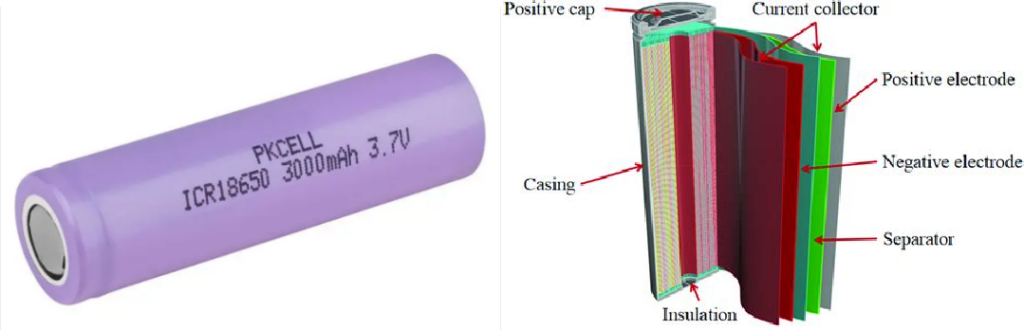
Common chemical systems include
- NCM (Nickel Cobalt Manganese) — high energy density, widely used in consumer electronics and EVs
- NCA (Nickel Cobalt Aluminum) — even higher energy density, used in high performance EVs
- LFP (Lithium Iron Phosphate) — excellent thermal stability and long cycle life, ideal for energy storage and power tools
Internal Structure and Working Principle
An 18650 cell consists of several key components:
Cathode: NCM, NCA, or LFP materials
Ánodo: typically graphite or silicon enhanced graphite
Electrolito: lithium salt (e.g., LiPF₆) dissolved in organic solvents
Separator: microporous polyolefin membrane preventing internal short circuits
Steel can: provide mechanical protection and pressure resistance
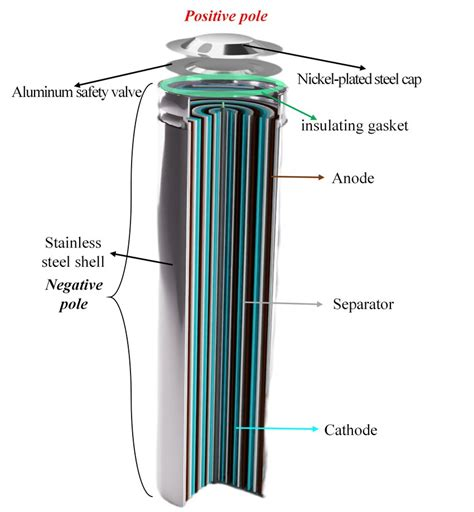
The battery operates through the reversible movement of lithium ions between the cathode and anode during charge and discharge. This intercalation mechanism enables high energy density and long cycle life.
Key Performance Specifications
Engineers typically evaluate 18650 cells based on the following parameters:
| Parameter | Typical Range | Technical Notes |
| Tensión nominal | 3.6–3.7 V | Depends on chemistry |
| Capacidad | 1800–3500 mAh | Higher for NCM/NCA |
| Densidad energética | 180–260 Wh/kg | Influences runtime and size |
| Ciclo de vida | 500–2000 cycles | LFP offers the longest life |
| Continuous Discharge Rate | 1C–30C | Power tools require high C rate |
| Temperatura de funcionamiento | −20°C to 60°C | Low temperature performance varies |
These parameters determine whether a cell is suitable for high power, long-life, or high capacity applications.
Chemistry Comparison: NCM vs. NCA vs. LFP
NCM (Nickel Cobalt Manganese)
Ventajas: balanced performance, high capacity
Desventajas: moderate thermal stability
Aplicaciones: laptops, EV battery packs, drones
NCA (Nickel Cobalt Aluminum)
Ventajas: highest energy density among 18650 chemistries
Desventajas: requires strict thermal management
Aplicaciones: high performance EVs (e.g., early Tesla packs)
LFP (Lithium Iron Phosphate)
Ventajas: excellent safety, long cycle life, stable at high temperatures
Desventajas: lower energy density
Aplicaciones: energy storage systems, power tools, ebikes
What are the major application scenarios?
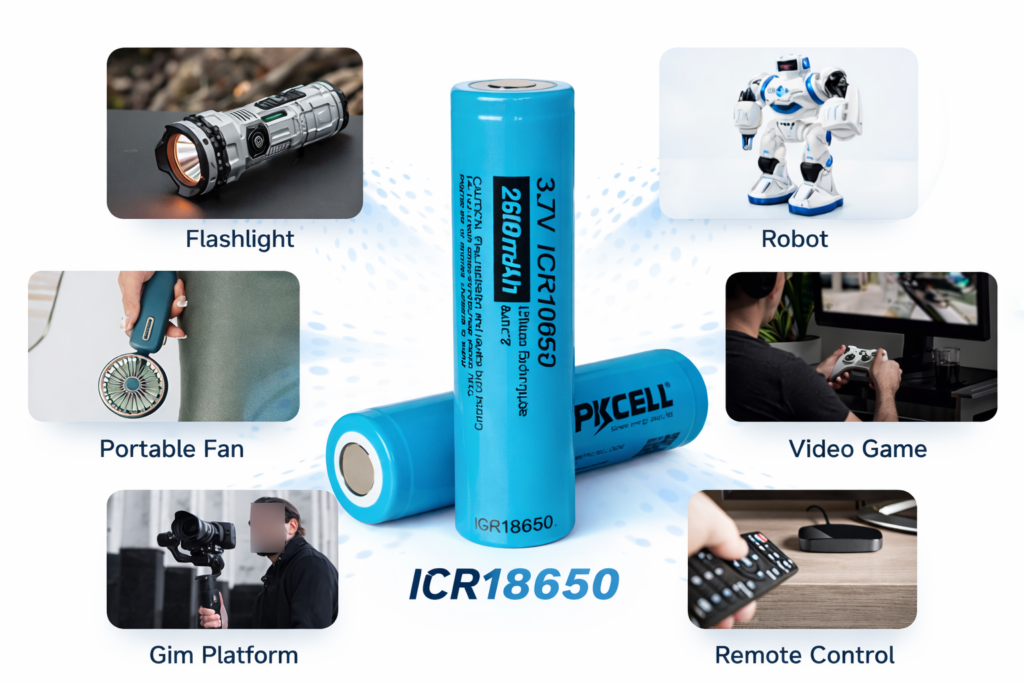
An 18650 lithium battery is widely used across industrial and professional environments because it delivers a strong balance of energy density, durability, and stable performance. In industrial automation, these cells power robots, AGVs, and precision actuators that require reliable high‑current output for motors and control systems. Portable measurement tools such as thermal imagers, gas detectors, and laser inspection devices depend on 18650 cells to maintain long operating hours in demanding field conditions. Communication and IoT infrastructure—including backup modules for base stations, smart meters, and remote monitoring units—benefits from the battery’s low self‑discharge and predictable long‑term stability. Medical and laboratory equipment, from infusion pumps to portable diagnostic analyzers, rely on the safety and consistency of high‑quality 18650 cells, especially LFP variants. Emergency lighting, fire alarm systems, and safety beacons also use these batteries to ensure instant, dependable power during outages. Together, these applications highlight the 18650 battery’s role as a versatile and robust energy source for mission‑critical systems.
Engineering Selection Guide
Choosing the right 18650 cell requires balancing performance, safety, and cost. Key considerations include:
Capacity vs. discharge rate: high capacity cells usually have lower discharge capability
Cycle life vs. energy density: LFP lasts longer but stores less energy
Thermal stability: critical for high power or high temperature environments
Brand consistency: essential for large battery packs to ensure uniform performance
Protection requirements: PTC, CID, and BMS integration are mandatory for safety
For high-power tools, a 20C–30C discharge cell is ideal, while energy storage systems benefit from long life LFP cells.
Safety Requirements and Best Practices
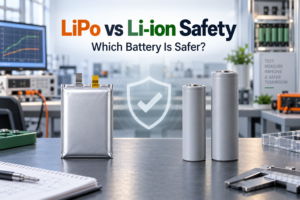
18650 lithium batteries must be handled with strict safety protocols due to their high energy density:
Avoid overcharging, over discharging, and short circuits
Use a Battery Management System (BMS) for protection
Prevent exposure to temperatures above 60°C
Ensure proper cell matching in battery packs
Use certified products (UL, CE, UN38.3) for compliance
Thermal runaway risks can be minimized through proper design, quality control, and protective electronics.



 English
  Français
  Español de México
  Deutsch
  Polski
  Italiano
  Русский
  한국어
한국어  Português