 Pile alcaline
 Batterie carbone-zinc
 Pile bouton
 Piles primaires au lithium
 Piles rechargeables
 Pack batterie personnalisé
 Batterie lithium rechargeable par USB
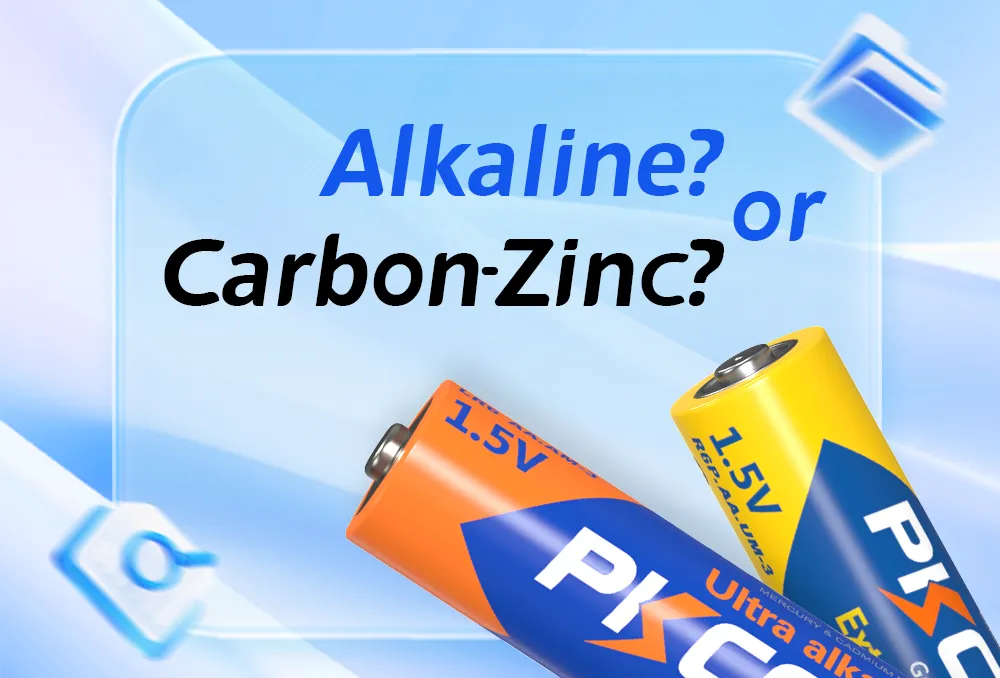
Many people encounter these problems when using batteries: Some AA batteries last a long time, while others run out of power quickly; some devices require frequent battery replacements, while others can last a year. Most people assume it’s a battery quality issue, but in reality, in most cases, it’s because they haven’t chosen the right battery type. Alkaline and carbon-zinc batteries are the two most common types in daily life and various devices. They look similar, but their performance and applicable scenarios differ greatly. Choosing the right battery not only ensures greater durability but also saves money.
Why do different devices have different battery requirements?
The fundamental reason lies in the different power consumption methods of the devices.
- They can generally be divided into two categories: High-power-consuming devices: These require a large current instantaneously, such as toy cars, game controllers, camera flashlights, electric shavers, and high-powered flashlights.
- Low-power-consuming devices: These operate with a low current for extended periods, such as remote controls, quartz clocks, calculators, wireless mice, and electronic scales. Choosing the wrong battery can lead to problems such as rapid power consumption, unstable performance, and high operating costs.
What are the differences between alkaline batteries and carbon-zinc batteries?
Their core differences lie in energy density, current output capability, and discharge characteristics. Below, we will delve into each of these two types of batteries in detail.
Alkaline batteries suitable for high-power-consuming devices.
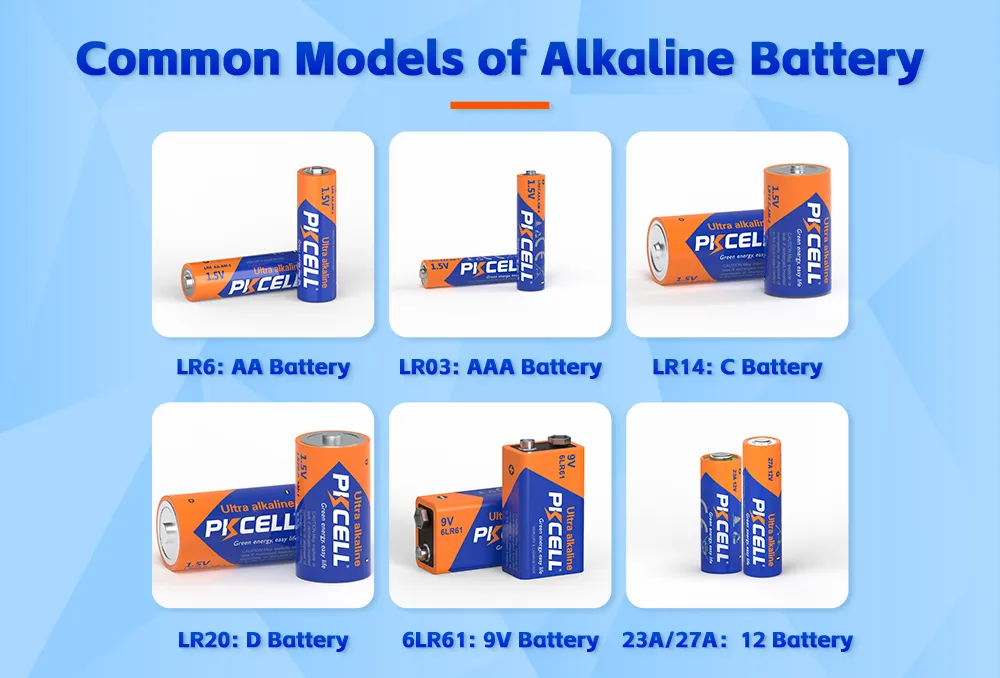
The full name of alkaline batteries is alkaline zinc-manganese batteries. Common models include LR6 (AA), LR03 (AAA), and LR61. Alkaline batteries use high-density manganese dioxide as the positive electrode material, zinc powder as the negative electrode material, and a highly conductive electrolyte, thus having lower internal resistance and higher energy density.
Chemical Characteristics:
- Chemical Reaction: Zn + MnO₂ + H₂O → Mn(OH)₂ + ZnO– No gas is produced during the reaction, resulting in stable voltage and a smooth discharge plateau.
- The capacity of alkaline batteries of the same model is 3-7 times that of carbon-zinc batteries, with superior low-temperature performance, making them suitable for continuous high-current discharge.
- For example, a size 5 alkaline battery can achieve a low-current discharge capacity of 2800-3100mAh.
Environmental Protection and Certification:
- Biker alkaline batteries use a lead-free, cadmium-free, and mercury-free, and environmentally friendly formula, meeting international environmental standards and reaching international mainstream levels in environmental protection.
- The battery surface should be marked with “ALKALINE” or “Alkaline Battery”. Applicable Devices: Toy cars, game controllers, camera flashlights, electric shavers, high-intensity flashlights, electronic medical equipment, and other applications requiring high current.
Carbon-zinc batteries suitable for low-power devices.
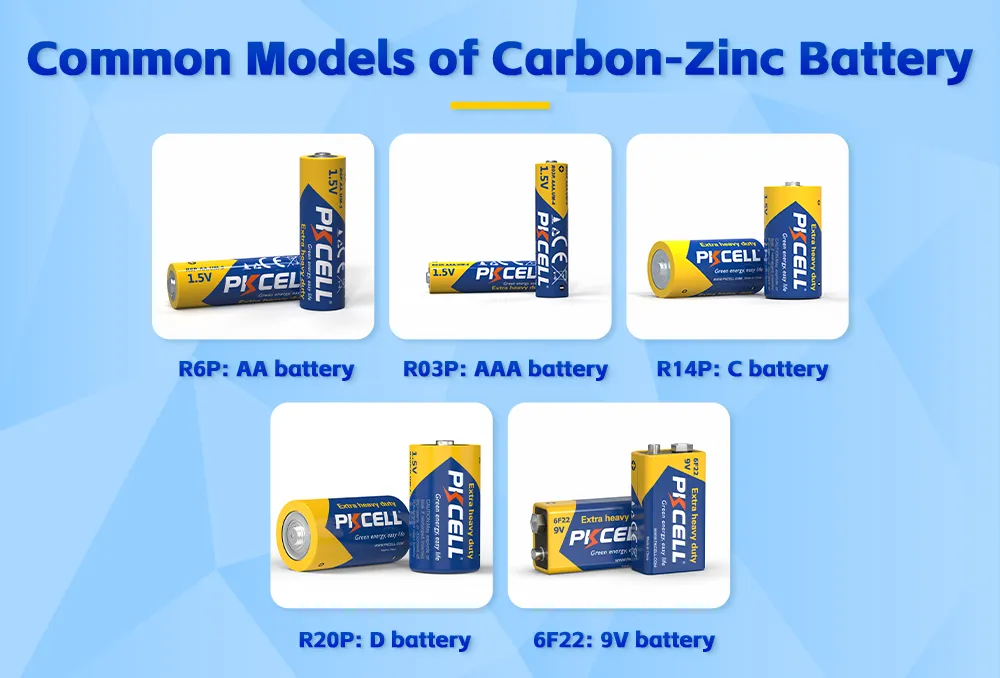
A carbon-zinc battery, also known as a neutral zinc-manganese dioxide dry cell battery or a zinc-manganese battery, has manganese dioxide and a carbon rod as its positive electrode, a zinc cylinder as its negative electrode, and a paste-like electrolyte composed of ammonium chloride (NH₄Cl) and zinc chloride (ZnCl₂). The conductive structure consists of a carbon rod and a zinc casing, with the zinc cylinder serving as both the negative electrode and the outer shell.
Structure and Chemical Characteristics:
- Positive electrode: carbon rod; Negative electrode: zinc cylinder; Electrolyte: paste-like; Internal resistance: relatively high.
- Chemical reaction: Zn + 2MnO₂ + 2NH₄⁺ → Zn²⁺ + Mn₂O₃ + 2NH₃ + H₂O- Capacity is relatively low; for example, a size 5 carbon-zinc battery discharges at a low current of approximately 600~850mAh, but this is sufficient for low-power devices.
- Flat discharge curve, suitable for prolonged intermittent use at low current.
Environmental Protection and Certification:
- Carbon-zinc batteries are lead-, cadmium-, and mercury-free. Applicable devices: TV remote controls, air conditioner remote controls, quartz clocks, wireless mice, calculators, radios, electronic scales, and other low-power devices.
Comparison Between Alkaline Batteries and Zinc-Carbon Batteries
| Comparison Item | Pile alcaline | Zinc-Carbon Battery |
|---|---|---|
| Positive Electrode Material | Manganese dioxide (MnO₂) | Manganese dioxide (MnO₂) |
| Negative Electrode Material | Granular zinc / zinc powder | Zinc |
| Électrolyte | Potassium hydroxide (KOH) solution | Paste of ammonium chloride (NH₄Cl) and zinc chloride (ZnCl₂) |
| Conductive Structure | Copper nail/current collector, steel can | Carbon rod, zinc casing |
| Casing Material | Steel can | Zinc can (also serves as the negative electrode) |
| Résistance interne | Plus bas | Plus élevé |
| Reaction Principle | Zn + MnO₂ + H₂O → Mn(OH)₂ + ZnO | Zn + 2MnO₂ + 2NH₄⁺ → Zn²⁺ + Mn₂O₃ + 2NH₃ + H₂O |
| Gas Generation | No gas generation; stable voltage | Gas is absorbed by MnO₂; voltage drops faster |
| Structural Features | Electrode structure is opposite to that of ordinary batteries, increasing relative surface area; granular zinc provides a larger reaction area | Traditional paste-type or cardboard structure; carbon rod as the positive terminal, zinc can as the negative electrode |
| Sealing Method | Steel-can sealing; safe and reliable | Paste electrolyte; relatively poor sealing performance |
| Capacity Comparison | For the same size, capacity is 3–7 times that of a zinc-carbon battery | Capacité inférieure |
| Low-Temperature Performance | Bon | Poor |
| Suitable Discharge Current | Continuous high-current discharge | Gas is absorbed by MnO₂; the voltage drops faster |
How to choose the best?
Actually, there’s no “better,” only “more suitable.” Just remember this principle: choose alkaline batteries for high-power-consuming devices and carbon-zinc batteries for low-power-consuming devices. Choosing the right battery not only improves the user experience but also reduces overall operating costs.
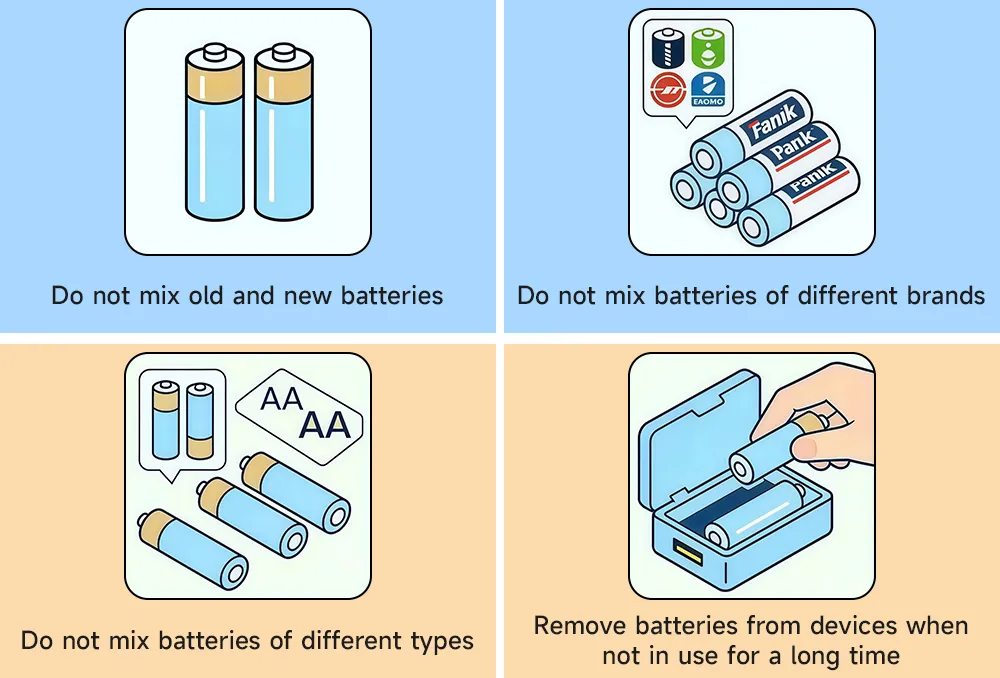
These usage details are often overlooked. In daily use, you should also pay attention to the following:
- Do not mix new and old batteries.
- Do not mix batteries of different brands.
- Do not mix batteries of different types.
- Remove the batteries if the device will not be used for a long time. These simple details can effectively reduce the risk of leakage and extend the life of your device.
Stability and Sustainability: The Future of Reliable Battery Power
Stability: The Core of Reliable Battery Performance
In the battery industry, stability is the foundation of reliable power. For users, a battery is not just about whether it works—it must deliver consistent, safe, and long-lasting performance throughout its lifespan.
Behind every high-quality alkaline battery or carbon battery, stability is achieved through strict control of the entire manufacturing process. From raw material selection to advanced production technology and quality inspection, each stage plays a vital role in ensuring battery reliability.
Key factors that determine battery stability include:
- High-quality electrode materials and chemical formulation
- Precision manufacturing and assembly processes
- Comprehensive performance and safety testing
- Strict quality control standards
These measures ensure that every battery maintains stable voltage output, long shelf life, and dependable energy delivery.
As the battery industry continues to evolve, mercury-free batteries have become the global standard. Compared with older battery technologies, modern mercury-free alkaline and carbon batteries provide strong performance while significantly reducing environmental risks.
Although small in size, batteries power many everyday devices—from remote controls and wireless mice to smart home products and portable electronics. Choosing the right battery type is therefore essential. Matching the appropriate battery to the device ensures better stability, longer operating time, and a more economical power solution.
Green Energy and Eco-Friendly Battery Innovation
Sustainability has become a key direction in modern battery development. Bike is committed to promoting green energy solutions and eco-friendly battery manufacturing.
All Bike alkaline batteries and carbon batteries are produced using mercury-free, lead-free, and cadmium-free materials, helping reduce environmental pollution and ensuring compliance with global environmental standards.
In addition to environmentally friendly materials, Bike continuously improves its sustainable manufacturing practices, including:
- Reducing energy consumption during battery production
- Improving raw material utilization efficiency
- Developing environmentally friendly packaging solutions
- Optimizing production processes to minimize waste
These initiatives help reduce the environmental impact of battery manufacturing while maintaining high performance and reliable battery power.
Looking ahead, Bike will continue investing in next-generation battery technologies, including higher-performance alkaline batteries, improved carbon batteries, and innovative energy storage solutions. By combining technology innovation with environmental responsibility, Bike aims to provide long-lasting, eco-friendly batteries for a wide range of applications.
From household electronics to industrial devices, Bike’s mission is simple: deliver stable energy and reliable battery power to every corner of the world.