
 Pile alcaline
 Batterie carbone-zinc
 Pile bouton
 Piles primaires au lithium
 Piles rechargeables
 Pack batterie personnalisé
 Batterie lithium rechargeable par USB
Table des matières
- Why Are LiMnO₂ Batteries Important in Modern Power Systems?
- The Shift Toward Smaller, Smarter, Longer‑Lasting Devices
- Ultra-Long Cycle Life
- How LiMnO₂ Batteries Work — And Why It Matters: Performance Characteristics of LiMnO₂ Batteries?
- Key Advantages That Make LiMnO₂ Batteries Stand Out
- Common LiMnO₂ Battery Types
- Limitations You Should Know
- Summary Table: LiMnO₂ vs. Alkaline Batteries
Why Are LiMnO₂ Batteries Important in Modern Power Systems?
When I first stepped into the battery industry years ago, I didn’t expect that a seemingly “simple” primary lithium battery—LiMnO₂—would become one of the most frequently discussed technologies in my conversations with global clients. From smart metering companies in Europe to medical device manufacturers in the U.S., and from IoT startups in Southeast Asia to industrial sensor suppliers in the Middle East, the demand for long‑life, stable, and maintenance‑free power sources has grown at a pace far beyond what many predicted.
And in this rapidly evolving landscape, Dioxyde de lithium et de manganèse (LiMnO₂) batteries have quietly become the backbone of countless modern devices.
Today, we want to share—not in the old days, but also in the old days.
The Shift Toward Smaller, Smarter, Longer‑Lasting Devices
Over the past decade, electronic devices have undergone a dramatic transformation:
- They’ve become smaller
- They’ve become smarter
- They’ve become more energy‑efficient
- And they’re increasingly expected to run for years without maintenance
This shift is especially evident in IoT devices, smart meters, medical sensors, and industrial monitoring systems. These devices often operate in remote locations, harsh environments, or inside sealed structures where replacing batteries is costly—or simply impossible.
This is where LiMnO₂ batteries shine.
With a stable 3.0V output, haute densité énergétique, 10+ years of shelf lifeet excellent temperature tolerance, they offer a power solution that aligns perfectly with the needs of modern electronics.
How LiMnO₂ Batteries Work — And Why It Matters: Performance Characteristics of LiMnO₂ Batteries?
At the heart of every LiMnO₂ battery are three key components:
- Anode : Metallic lithium
- Cathode : Manganese dioxide (MnO₂)
- Électrolyte : Organic electrolyte solution
During discharge, lithium atoms release electrons that travel through the external circuit, powering the device. Meanwhile, lithium ions migrate toward the MnO₂ cathode, completing the electrochemical reaction.
This process delivers a consistent and stable voltage, which is crucial for:
- Precision sensors
- Medical monitoring devices
- Smart meters
- Security systems
In my experience working with overseas clients, “voltage stability” is one of the most frequently mentioned requirements—especially for devices that must operate accurately for years.
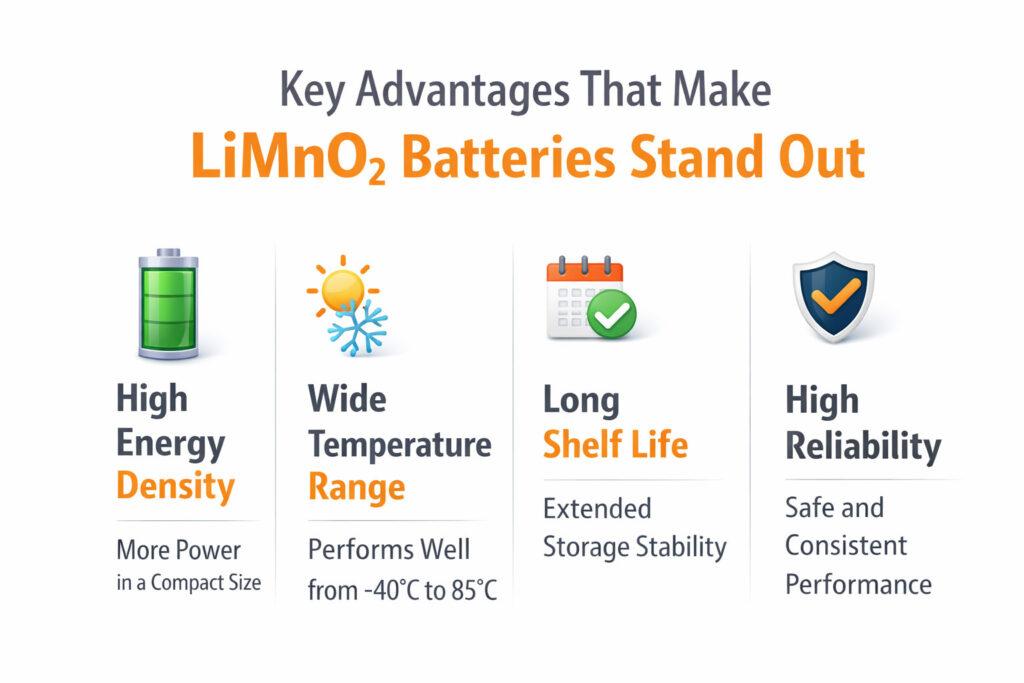
Key Advantages That Make LiMnO₂ Batteries Stand Out
1. High Energy Density
LiMnO₂ batteries pack more energy into a smaller volume, enabling compact device design without sacrificing performance.
2. Extremely Long Shelf Life
With a self‑discharge rate of less than 1% per year, these batteries can remain functional for 10 years or more—a major advantage for long‑term deployments.
3. Wide Operating Temperature Range
From –40°C to +85°C, LiMnO₂ batteries remain stable even in harsh outdoor or industrial environments.
4. Stable Discharge Curve
A flat voltage profile ensures consistent device performance throughout the battery’s life cycle.
5. Safe and Environmentally Friendly
LiMnO₂ batteries contain no mercury, cadmium, or lead, and their sealed design minimizes leakage risks.
Where LiMnO₂ Batteries Are Used — Real Cases from the Field
IoT & Smart Metering
Smart water, gas, and electricity meters often require batteries that last 8–15 years. LiMnO₂ is one of the few chemistries capable of meeting this demand.
Dispositifs médicaux
From glucose meters to infusion pumps, medical equipment relies on stable voltage and long-term reliability—two areas where LiMnO₂ excels.
Security & Monitoring
Smoke detectors, alarms, and wireless monitoring systems benefit from the battery’s long standby life.
Électronique grand public
Cameras, flashlights, remote controls, and key fobs commonly use LiMnO₂ batteries for their compact size and long runtime.
Common LiMnO₂ Battery Types
Cylindrical Models
- CR123A
- CR14250
- CR14505
- CR26500
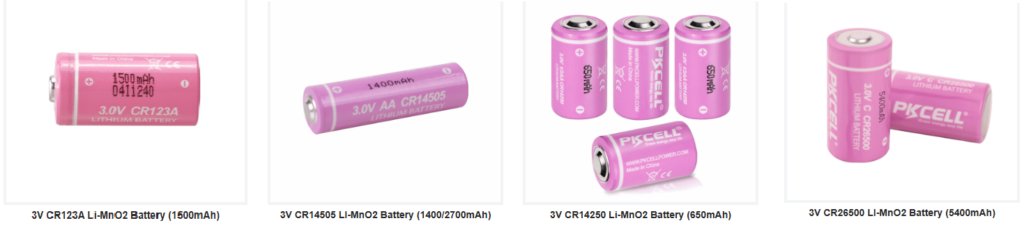
Used in industrial electronics, IoT devices, and high‑performance consumer products.
Coin Cells
- CR2032
- CR2025
- CR2450
Ideal for watches, calculators, medical sensors, and key fobs.
Pouch / Custom Cells
Perfect for smart cards, wearables, and ultra‑thin devices requiring a flexible design.
Limitations You Should Know
Even though LiMnO₂ batteries offer many advantages, they are not perfect:
- They are non‑rechargeable
- They are not suitable for high‑drain applications
For devices requiring frequent high‑current bursts, other chemistries like Li‑SOCl₂ or rechargeable Li‑ion may be more appropriate.
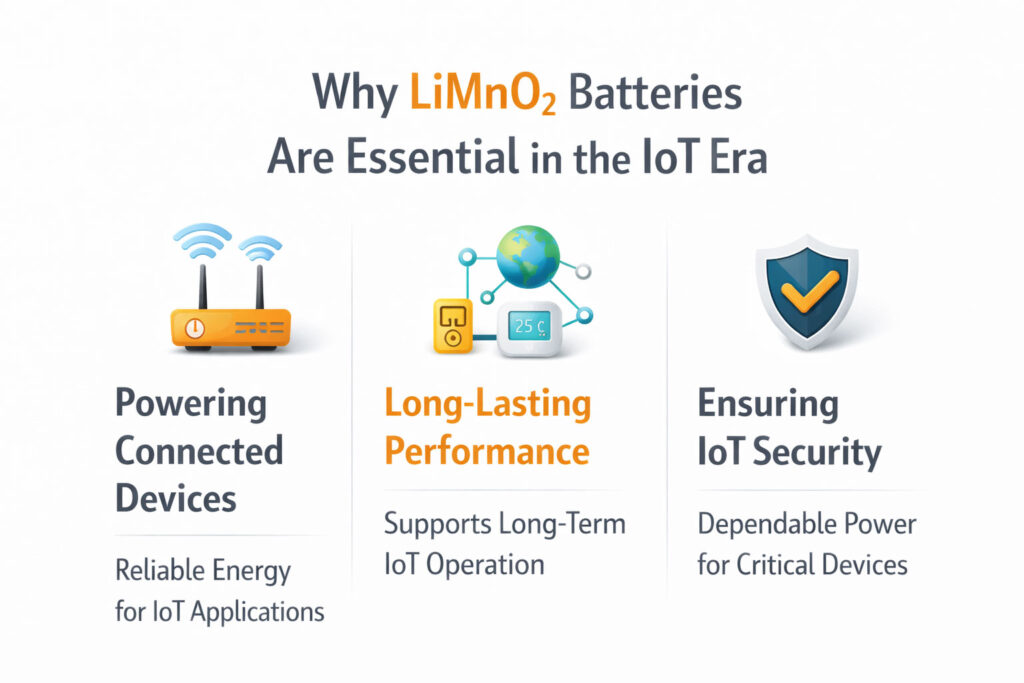
Why LiMnO₂ Batteries Are Essential in the IoT Era
As billions of IoT devices come online, the demand for:
- Long‑life power
- Stable voltage
- Wide temperature tolerance
- Maintenance‑free operation
continues to grow.
LiMnO₂ batteries provide a mature, reliable, and cost‑effective solution for these needs. In my work with global clients, I’ve seen firsthand how this chemistry enables large‑scale IoT deployments that would otherwise be impossible.
Summary Table: LiMnO₂ vs. Alkaline Batteries
| Fonctionnalité | LiMnO₂ | Alcaline | Why It Matters |
|---|---|---|---|
| Tension nominale | 3.0V | 1.5V | Higher efficiency |
| Densité énergétique | Haut | Medium | Longer runtime |
| Durée de conservation | 10 ans et plus | 3–5 years | Lower maintenance |
| Plage de température | –40°C to +85°C | 0°C to +45°C | Outdoor/industrial use |
| Discharge Curve | Stable | Unstable | Precision devices |
| Environmental Safety | No heavy metals | May contain heavy metals | Safer & greener |
Final Thoughts
LiMnO₂ batteries may not be the newest technology in the world, but they remain one of the most reliable and widely used primary lithium chemistries today. Their combination of stability, long life, and environmental safety makes them indispensable in modern electronics—especially in the fast‑growing IoT sector.
As more industries embrace automation, remote monitoring, and smart infrastructure, the importance of LiMnO₂ batteries will only continue to grow.
If you’re building devices that require long‑term, maintenance‑free power, this chemistry is absolutely worth considering.


