 알카라인 배터리
 탄소 아연 배터리
 버튼 셀 배터리
 기본 리튬 배터리
 충전식 배터리
 맞춤형 배터리 팩
 USB 충전식 리튬 배터리
Electric Golf Cart Battery
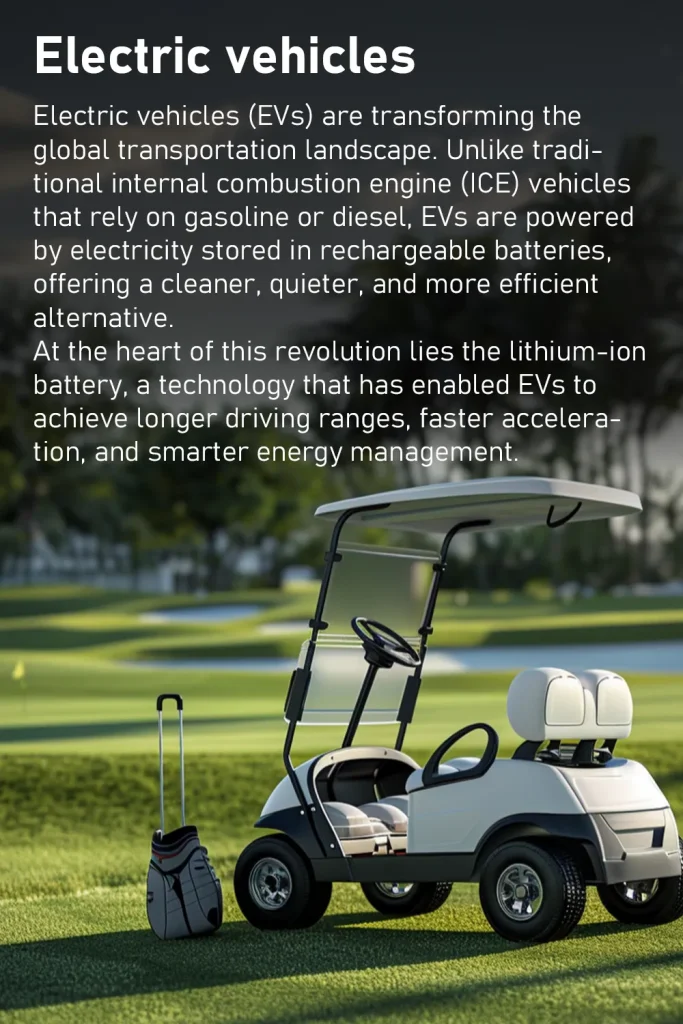
Electric golf carts have evolved far beyond their original role as quiet companions on the fairway. Today, they’re used in resorts, gated communities, campuses, industrial parks, and even urban mobility zones. At the heart of these versatile vehicles lies a powerful energy system: rechargeable batteries, most commonly lithium-ion (Li-ion) or lithium iron phosphate (LiFePO₄). These batteries enable electric golf carts to deliver smooth propulsion, instant torque, and regenerative braking—all while operating cleanly and efficiently.
This article explores how battery technology supports the core functions of electric golf carts, including electric propulsion, rechargeable energy storage, instant torque, and regenerative braking, and why these features are transforming low-speed electric mobility.
Electric Propulsion: Smooth, Silent, and Efficient
Electric propulsion is the defining feature of modern golf carts. Instead of relying on noisy gasoline engines, electric golf carts use battery-powered motors to drive the wheels. This results in a quiet, vibration-free ride—ideal for golf courses, residential areas, and hospitality environments.
Benefits of Electric Propulsion in Golf Carts:
- Silent Operation: Essential for peaceful environments like golf courses and resorts.
- Zero Emissions: No tailpipe emissions means cleaner air and reduced environmental impact.
- Low Maintenance: Electric motors have fewer moving parts than combustion engines, reducing wear and service needs.
- Energy Efficiency: Electric propulsion systems convert more energy into motion, maximizing battery usage.
Whether navigating gentle slopes or cruising across flat terrain, electric propulsion ensures a smooth and reliable experience for passengers and operators alike.
Rechargeable Batteries: The Heart of the System
Rechargeable batteries are the energy backbone of electric golf carts. Most modern models use lithium-ion or LiFePO₄ batteries due to their superior energy density, long cycle life, and safety profile.
Why Lithium-Based Batteries Are Ideal for Golf Carts:
- 높은 에너지 밀도: Enables longer driving ranges between charges, even with frequent stops and starts.
- Lightweight Design: Reduces overall vehicle weight, improving efficiency and handling.
- 긴 주기 수명: With proper management, lithium batteries can last for thousands of charge cycles.
- 고속 충전: Supports quick turnaround times for fleet operations or busy resort environments.
Compared to traditional lead-acid batteries, lithium-based options offer better performance, lower maintenance, and longer lifespan—making them a smart investment for golf cart operators.
Instant Torque: Responsive Power for Every Terrain
One of the standout features of electric golf carts is their ability to deliver instant torque. This means the motor provides full power immediately when the accelerator is pressed, without the delay or gear shifting found in combustion engines.
Advantages of Instant Torque in Golf Carts:
- Quick Starts: Ideal for navigating tight paths or starting on inclines.
- Smooth Acceleration: Enhances passenger comfort and control.
- Improved Traction: Especially useful on wet grass, gravel, or uneven terrain.
Instant torque allows golf carts to respond quickly to driver input, making them safer and more enjoyable to operate in a variety of settings—from golf courses to industrial campuses.
Regenerative Braking: Smart Energy Recovery
Regenerative braking is a feature increasingly found in advanced electric golf carts. It allows the vehicle to recover energy during deceleration, converting kinetic energy back into electrical energy and storing it in the battery.
How It Works:
- When the driver slows down or descends a slope, the motor acts as a generator.
- The wheels’ motion drives the motor, which produces electricity.
- This electricity is fed back into the battery, extending range and reducing energy waste.
Benefits of Regenerative Braking:
- Extended Battery Life: Reduces the frequency of charging.
- Improved Efficiency: Especially useful on hilly courses or stop-and-go routes.
- Lower Maintenance Costs: Reduces wear on mechanical brake components.
This feature not only improves energy efficiency but also contributes to smoother operation and lower operating costs over time.
🔧 System Integration and Design Considerations
Battery applications in electric golf carts go beyond propulsion. They influence vehicle design, safety, and user experience.
Key Integration Features:
- Battery Management Systems (BMS): Monitor temperature, voltage, and current to ensure safe and optimal performance.
- Modular Battery Packs: Allow for scalability and easy replacement or upgrades.
- Thermal Management: Ensures batteries operate within safe temperature ranges, especially in hot or cold climates.
Golf cart manufacturers are increasingly designing vehicles around the battery system, optimizing placement for balance, accessibility, and protection.
Environmental and Operational Impact
Electric golf carts offer significant environmental and economic advantages:
Environmental Benefits:
- Zero Emissions: Ideal for eco-sensitive areas like parks, campuses, and resorts.
- Quiet Operation: Reduces noise pollution in residential and recreational zones.
- Sustainable Charging: Can be powered by solar or renewable energy sources.
Operational Advantages:
- Lower Fuel Costs: Electricity is cheaper than gasoline.
- Reduced Maintenance: Fewer mechanical components mean fewer breakdowns.
- Long-Term Savings: Lithium batteries last longer and require less frequent replacement.
These benefits make electric golf carts a compelling choice for organizations focused on sustainability, cost-efficiency, and user comfort.
Real-World Applications
Electric golf carts are now used in a wide range of settings beyond the golf course:
- Resorts and Hotels: For guest transport and housekeeping.
- Industrial Parks: For staff movement and light cargo.
- Airports and Campuses: For shuttle services and internal logistics.
- Gated Communities: As personal mobility vehicles.
Each application benefits from the core battery-powered features: quiet propulsion, instant torque, and regenerative braking.
Battery Technology Trends
As demand grows, battery technology for golf carts continues to evolve:
- LiFePO₄ Adoption: Offers enhanced safety and longer cycle life, ideal for fleet operations.
- Solid-State Batteries: Emerging technology with higher energy density and faster charging.
- Smart Charging Systems: Enable remote monitoring and optimized charging schedules.
These innovations promise even greater performance, safety, and sustainability for electric golf carts in the years ahead.
결론
Electric golf carts powered by rechargeable batteries are redefining low-speed mobility. With electric propulsion, instant torque, and regenerative braking, they offer a clean, efficient, and responsive alternative to gas-powered carts. Lithium-ion and LiFePO₄ batteries provide the energy density, safety, and longevity needed to support diverse applications—from leisure to logistics.
As battery technology continues to advance, electric golf carts will become even more capable, sustainable, and integrated into modern mobility ecosystems.
Electric Golf Cart Battery