
 Bateria alkaliczna
 Bateria węglowo-cynkowa
 Bateria guzikowa
 Podstawowe baterie litowe
 Akumulatory
 Niestandardowy zestaw baterii
 Bateria litowa ładowana przez USB
A battery is a device that stores chemical energy and converts it into electrical energy to power electronic devices. At its core, a battery consists of one or more electrochemical cells connected in series or parallel. Each cell features an anode, cathodeoraz electrolyte, which work together to create a potential difference and generate electric current when connected to a load.
When a battery supplies power, ions travel through the electrolyte while electrons flow through the external circuit — this flow of electrons is what we recognize as usable electrical energy. Batteries are ubiquitous in today’s world, from small AA cells to large lead-acid car batteries and advanced lithium-ion packs for electric vehicles.
Understanding basic battery principles — including napięcie, capacity, gęstość energiioraz chemical reactions — helps consumers make informed choices and extends device longevity.
Spis treści
Why Are There Different Types of Batteries?
Battery technology isn’t one-size-fits-all. Different devices require different power characteristics, which has led to a variety of battery chemistries and formats.
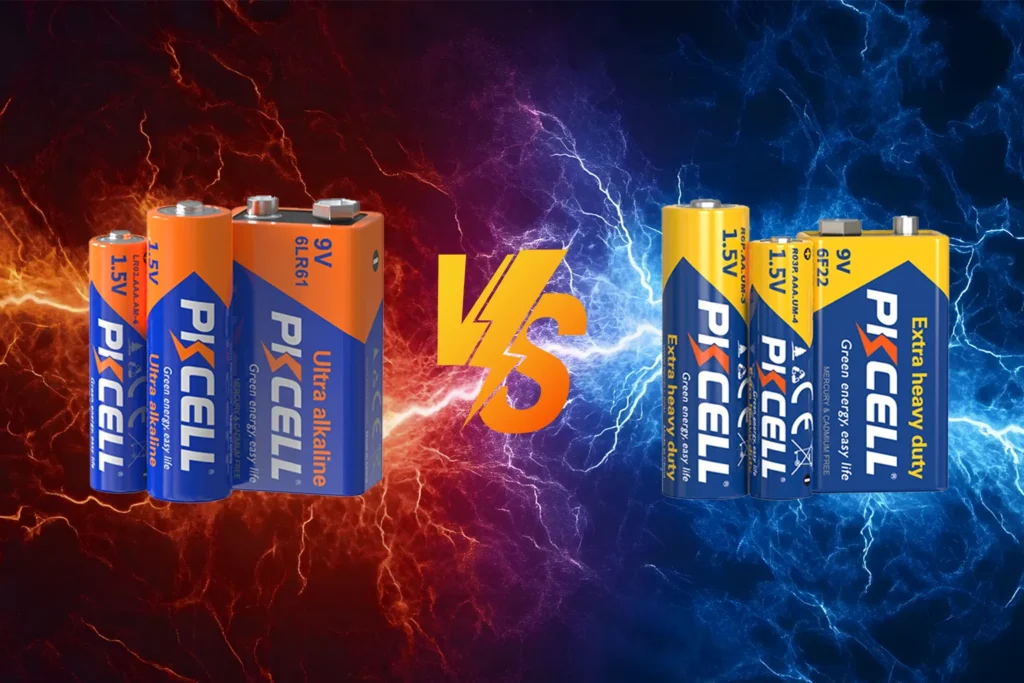
Two of the most common primary (non-rechargeable) battery types are:
- Carbon-Zinc Batteries
- Baterie alkaliczne
These batteries are widely used in household devices like flashlights, remote controls, clocks, and toys. Despite serving similar basic purposes, they differ significantly in performance, energy output, cost, and ideal applications.
What Is a Carbon-Zinc Battery?
Baterie węglowo-cynkowe, also known historically as Leclanché cells, were among the first dry cells widely used in the 20th century.
A typical carbon-zinc cell includes:
- A zinc can act as the anode
- A carbon rod as the cathode
- An acidic electrolyte such as ammonium chloride paste
The electrical reaction involves oxidation of zinc at the anode and reduction reactions at the cathode, generating a voltage of roughly 1.5 V per cell. These batteries are often labeled simply as “standard” or “everyday” batteries.
Advantages of Carbon-Zinc Batteries
- Economical and inexpensive to produce
- Good for low-drain applications
- Relatively lightweight and simple in design
Limitations of Carbon-Zinc Batteries
- Niższy gęstość energii compared to modern alternatives
- Krótsza żywotność and rapid voltage drop under load
- More prone to leakage, especially when depleted
- Performance drops in cold environments
Because of these drawbacks, carbon-zinc batteries have largely been replaced by alkaline cells in many applications.
What Makes Alkaline Batteries Better Than Carbon-Zinc?
Baterie alkaliczne represent a significant advance in battery chemistry and design. Instead of acidic electrolytes, they use a wodorotlenek potasu electrolyte, which offers a more stable chemical environment.
Key components include:
- Zinc powder as the anode
- Manganese dioxide as the cathode
- Potassium hydroxide electrolyte
This improved chemistry results in higher energy density, more stable voltage output, better performance under moderate to heavy loads, and extended shelf life.
Major Benefits of Alkaline Batteries
- Longer operational life — often 2–3× that of carbon-zinc cells
- Better performance in medium to high-drain devices
- Enhanced leakage resistance due to improved sealing
- More consistent voltage delivery across the life of the battery
- Operate more reliably across a wide range of temperatures
These advantages make alkaline batteries the preferred choice for:
- Digital cameras
- Gaming controllers
- Portable radios
- High-performance flashlights
- Remote-controlled toys
Even though they cost more upfront than carbon-zinc cells, the longer life and reduced replacements often make alkaline batteries more cost-effective over time.
How Do Primary and Secondary Batteries Compare?
It’s important to distinguish between primary (non-rechargeable) oraz secondary (rechargeable) baterie:
| Akumulator | ❌ No | ✅ Yes |
| Gęstość energii | Varies | High (e.g., Li-ion) |
| Koszt | Lower upfront | Higher upfront |
| Zastosowania | Low to medium drain | High demand + frequent use |
Alkaline and carbon-zinc batteries are both primary types — once discharged, they are typically discarded. In contrast, lead-acid, nickel-cadmium (NiCd), nickel-metal hydride (NiMH)oraz lithium-ion batteries are examples of secondary types that recharge and reuse energy.
Where Do Lead-Acid and Lithium-Ion Fit In?
Although the earlier sections focus on primary dry cells, it’s worth briefly noting:
- Lead-acid batteries use lead and sulfuric acid to produce electricity and can be recharged, which is why they’re still widely used for automotive and backup power systems.
- Akumulatory litowo-jonowe, common in smartphones and electric vehicles, offer extremely Wysoka gęstość energii and excellent cycle life, though they require sophisticated battery management systems.
Why Does Battery Chemistry Matter for Consumers?
The choice of battery chemistry isn’t just academic — it affects real-world performance in several ways:
Runtime — High energy density means longer operation between replacements
Efektywność kosztowa — Longer battery life reduces the total cost of ownership
Leak Resistance — Superior sealing protects devices
Temperature Performance — Some chemistries function better in extremes
For everyday use, alkaline cells often offer the best balance of performance and price. However, for professional tools or high-drain gadgets, advanced rechargeable batteries may be superior.
Conclusion: Choosing the Right Battery
Understanding differences in battery types — from classic carbon-zinc to modern alkaline and beyond — empowers smarter decisions and reduces wasteful replacements. Whether you’re powering a child’s toy or a high-drain device, knowing what battery chemistry matches your need ensures reliability, efficiency, and better overall performance.
Vedio from


 English
  Français
  Español de México
  Deutsch
  Polski
  Italiano
  Русский
  한국어
한국어  Português