 Bateria alkaliczna
 Bateria węglowo-cynkowa
 Bateria guzikowa
 Podstawowe baterie litowe
 Akumulatory
 Niestandardowy zestaw baterii
 Bateria litowa ładowana przez USB
Wprowadzenie
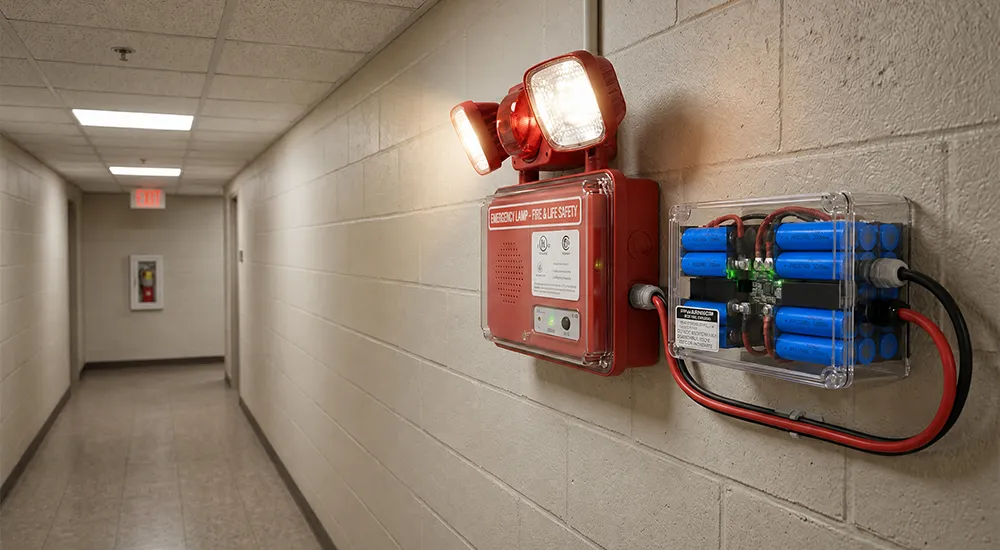
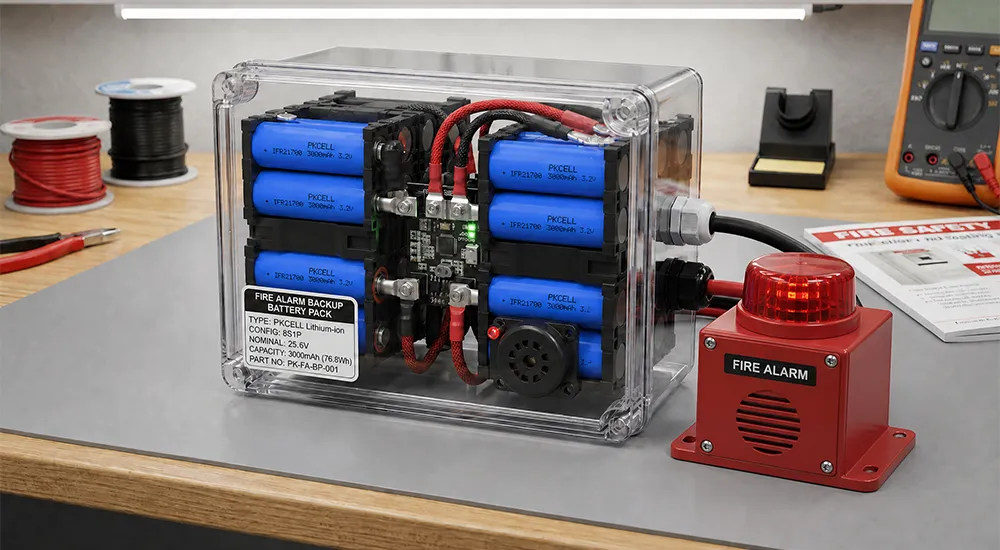
Fire alarm systems are a critical line of defense for both building security and home safety. The fire alarm battery serves as the core backup power source and directly determines whether detectors, alarm panels, manual pull stations, and other devices can continue operating during a power outage.
According to NFPA 72 (National Fire Alarm and Signaling Code), fire alarm backup batteries must provide 24 hours of standby power plus 5 minutes of full-load alarm operation. Improper battery selection, insufficient capacity, or performance degradation can cause system failure and result in the loss of valuable early-warning time during a fire emergency.
Whether used in commercial fire control panels, residential property alarm systems, standalone smoke alarms, or carbon monoxide detectors, properly matched fire alarm batteries are essential for safety. This article provides a comprehensive technical reference covering battery types, specifications, and dimensions, capacity calculations, industry standards, selection tips, and leading brands.
1. Main Types of Fire Alarm Batteries and Technical Features
Fire alarm batteries are generally divided into three categories: Sealed Lead Acid (SLA) batteries, alkaline batteries, and lithium/lithium iron phosphate (LiFePO4) batteries.
1.1 Sealed Lead Acid (SLA/AGM) Batteries
Sealed Lead Acid batteries are the industry-standard choice for fire alarm control panels. With a nominal voltage of 12V, they are widely used in residential and commercial fire alarm systems due to their high reliability, reasonable cost, and strong discharge capability.
Common capacities range from 7Ah to 33Ah and above:
• 7Ah for small panels
• 18Ah for medium-sized expandable systems
• 33Ah+ for large buildings requiring extended backup time
These batteries feature maintenance-free sealed construction, require no electrolyte refilling, and typically operate from -20°C to 50°C. They are vibration-resistant and leak-proof, making them suitable for equipment rooms and electrical closets.
A representative product is the Interstate Batteries Power Patrol series, which is compatible with major systems from Honeywell, ADT, and Kidde and uses standard F1 terminals for easy installation.
1.2 Alkaline Batteries (9V / AA / AAA)
Alkaline batteries are primarily used in standalone residential smoke and carbon monoxide detectors. Traditional alarms commonly use 9V alkaline batteries with a nominal capacity of approximately 500mAh and are typically replaced every six months.
Many modern detectors now use two or three AA or AAA batteries, providing significantly higher energy reserves and longer service life.
Advantages include low cost, broad availability, and ready-to-use convenience. Limitations include shorter lifespan and faster capacity loss in extreme temperatures.
1.3 Lithium and LiFePO4 Batteries
Lithium-based fire alarm batteries are premium long-life solutions with service lives of up to 10 years. They are commonly used in sealed 10-year smoke alarms and small to medium-sized alarm panels.
Key advantages include:
• Stable voltage output
• Wide operating temperature range (-20°C to 60°C)
• High energy density
• Minimal maintenance requirements
Rechargeable LiFePO4 batteries include built-in Battery Management Systems (BMS) that protect against overcharge, over-discharge, short circuits, and thermal runaway.
2. Fire Alarm Battery Capacity Calculation and Standard Sizes
2.1 Capacity Calculation Formula
Battery sizing should be based on the standard formula with a 20% safety margin:
Required Ah = 1.2 × (Standby Current × 24 hours + Alarm Current × 0.083 hours)
Example:
Standby current = 0.25A
Alarm current = 2A
Required capacity ≈ 7.5Ah
In practice, a 12V 12Ah battery is recommended to provide additional margin for wiring losses and aging.
Common Battery Sizes
12V 7Ah
• Dimensions: 5.94 × 2.56 × 3.70 inches
• Weight: 4.63 lbs
• Typical use: Small residential and retail fire panels
12V 5Ah
• Dimensions: 3.54 × 2.76 × 3.98 inches
• Typical use: Compact equipment and access control systems
12V 18Ah
• Typical use: Medium-capacity fire alarm systems with multiple detectors and notification devices
12V 33Ah
• Dimensions: 6.72 × 6.25 × 6.50 inches
• Typical use: Large commercial and industrial facilities
Industry Standards and Safety Requirements
NFPA 72
Requires 24 hours of standby plus 5 minutes of full-load alarm operation. Batteries should be tested annually and replaced when capacity falls below 80% of the rated value.
UL 864
Backup batteries used in fire alarm systems should be UL-listed and matched to the control panel manufacturer’s specifications.
NFPA 855
Provides installation and safety requirements for lithium battery energy storage systems.
UN 38.3
Required for safe transportation of lithium batteries.
Many jurisdictions now require residential smoke alarms to use sealed 10-year lithium batteries.
Leading Fire Alarm Battery Brands
Interstate Batteries Power Patrol
Premium commercial fire alarm batteries such as FAS1075 (12V 7Ah) and FAS1055 (12V 5Ah). Known for excellent reliability and compatibility.
eseegoo 12V 7Ah SLA Battery
A cost-effective replacement option compatible with ADT and Honeywell systems.
Enegitech Lithium Batteries
Includes 9V 1200mAh lithium batteries and CR123A cells with up to 10-year shelf life.
DURNERGY and Powersonic
Affordable options for residential and small commercial applications.
Practical Tips for Selection, Replacement, and Maintenance
• Commercial fire panels: Choose 12V 7Ah or 18Ah SLA batteries.
• Residential smoke detectors: Prefer sealed 10-year lithium batteries.
• Compact installations: Use 12V 5Ah batteries.
Avoid uncertified batteries and never mix batteries of different brands or capacities.
Keep batteries away from high heat, humidity, and direct sunlight. Perform annual capacity testing in accordance with NFPA 72.
Typical replacement intervals:
• 9V / AA alkaline batteries: Every 6 months
• SLA batteries: Every 3–5 years
• Sealed 10-year lithium batteries: Replace with the entire alarm unit at end of life
Wnioski
Fire alarm batteries are the invisible lifeline of any fire protection system. Proper battery type selection, accurate sizing, regulatory compliance, and dependable quality are all essential.
From traditional sealed lead acid batteries to advanced long-life lithium solutions, each application requires a specific battery configuration. Understanding capacity calculations, standards, dimensions, and brand differences helps ensure code compliance, extend equipment life, and reduce maintenance costs.
For engineering procurement, property management, and homeowners, choosing UL- and NFPA-compliant batteries from trusted brands and following proper replacement schedules is one of the most effective ways to strengthen fire safety.