 Bateria alkaliczna
 Bateria węglowo-cynkowa
 Bateria guzikowa
 Podstawowe baterie litowe
 Akumulatory
 Niestandardowy zestaw baterii
 Bateria litowa ładowana przez USB
Medical examination scales are essential tools in both home healthcare and professional medical environments. From daily body weight tracking to clinical health assessments, these devices rely on precise sensors and stable electronics to deliver accurate results. While users often focus on features such as measurement accuracy, connectivity, or design, the battery choice behind the device plays a crucial role in long-term performance and reliability.
This article explores the differences between akumulatory oraz disposable batteries for medical examination scales, helping manufacturers, distributors, and end users choose the most suitable power solution.
Why Battery Selection Matters in Medical Scales
Medical scales may appear to be low-power devices, but their internal components—including load cells, microcontrollers, displays, and wireless modules—require consistent and stable voltage to function correctly.
An unstable power supply can result in:
- Inaccurate readings
- Slow display response
- Unexpected shutdowns
- Reduced device lifespan
As medical data accuracy is critical, selecting the right battery type is not just a convenience issue, but a performance and reliability decision.
Disposable Batteries: A Traditional and Accessible Solution
Disposable batteries, especially alkaline AA or AAA batteries, have been widely used in medical examination scales for many years.
One of their biggest advantages is ease of use. They are widely available worldwide, easy to install, and require no charging equipment. For users who only use their scale occasionally, disposable batteries provide a straightforward and reliable solution.
Additionally, disposable batteries typically have a long shelf life, making them suitable for backup devices or emergency use scenarios.
However, disposable batteries also come with limitations. Once depleted, they must be replaced entirely, leading to ongoing replacement costs. Over time, frequent battery changes can become inconvenient and expensive, particularly in environments where scales are used daily.
Rechargeable Batteries: Designed for Modern Medical Devices
Rechargeable batteries, such as Ni-MH or lithium rechargeable batteries, are increasingly adopted in modern medical examination scales and smart health devices.
Although the initial investment is higher, rechargeable batteries offer long-term cost savings by allowing hundreds of charge cycles. This makes them ideal for devices that are used frequently, such as in hospitals, clinics, fitness centers, and long-term home health monitoring.
Rechargeable batteries also deliver more consistent power output over their discharge cycle. This stable voltage helps ensure accurate measurements and reliable digital performance throughout daily use.
From a sustainability perspective, rechargeable batteries significantly reduce battery waste, aligning with global trends toward environmentally responsible healthcare solutions.
Cost Comparison Over Time
When comparing battery options, it is important to consider not just the upfront cost, but the total cost of ownership.
Disposable batteries have a low initial price, but require repeated purchases over time. In contrast, rechargeable batteries may cost more initially, but their ability to be reused many times dramatically reduces long-term expenses.
For medical facilities or households that rely on daily or weekly measurements, rechargeable batteries quickly become the more economical choice.
Environmental Impact and Sustainability
Environmental responsibility is becoming a key factor in medical device design and procurement.
Disposable batteries contribute to electronic waste and may contain materials that are harmful if not properly recycled. In contrast, rechargeable batteries reduce waste generation and support sustainable product lifecycles.
Many medical device manufacturers now prioritize rechargeable battery solutions to meet environmental regulations and corporate sustainability goals.
Performance Stability and Measurement Accuracy
Power stability directly affects sensor performance in medical examination scales.
Disposable batteries provide stable voltage at the beginning of their lifespan, but voltage gradually drops as the battery discharges. If batteries are not replaced promptly, this may impact measurement accuracy or cause device errors.
Rechargeable batteries generally feature a flatter discharge curve, maintaining stable voltage output until near depletion. This makes them particularly suitable for precision medical equipment where consistent performance is essential.
Convenience and User Experience
From a user perspective, convenience is another important factor.
Disposable batteries require no charging management, but frequent replacements can be inconvenient, especially if batteries run out unexpectedly.
Rechargeable batteries eliminate frequent replacements and are often integrated into modern scale designs with USB or Type-C charging ports. This enhances user experience and reduces downtime.
For healthcare professionals, minimizing device maintenance is a clear advantage.
Choosing the Right Battery for Different Use Scenarios
There is no single solution that fits every application. The ideal battery choice depends on how and where the medical examination scale is used.
Occasional home use: Disposable batteries remain a practical and cost-effective option.
Frequent home monitoring: Rechargeable batteries offer better long-term value and convenience.
Clinical and professional use: Rechargeable batteries are strongly recommended for stability, cost efficiency, and sustainability.
If a medical scale is designed with a built-in rechargeable battery, users should always follow the manufacturer’s recommended charging and usage guidelines.
Battery Considerations for OEM and Medical Device Manufacturers
For OEMs and medical device brands, battery selection affects not only performance but also product positioning and market competitiveness.
Rechargeable battery solutions enable:
- Slimmer device designs
- Integrated charging features
- Reduced after-sales maintenance
- Stronger sustainability messaging
As smart medical devices continue to evolve, rechargeable batteries are becoming the preferred standard in modern healthcare equipment.
Final Conclusion
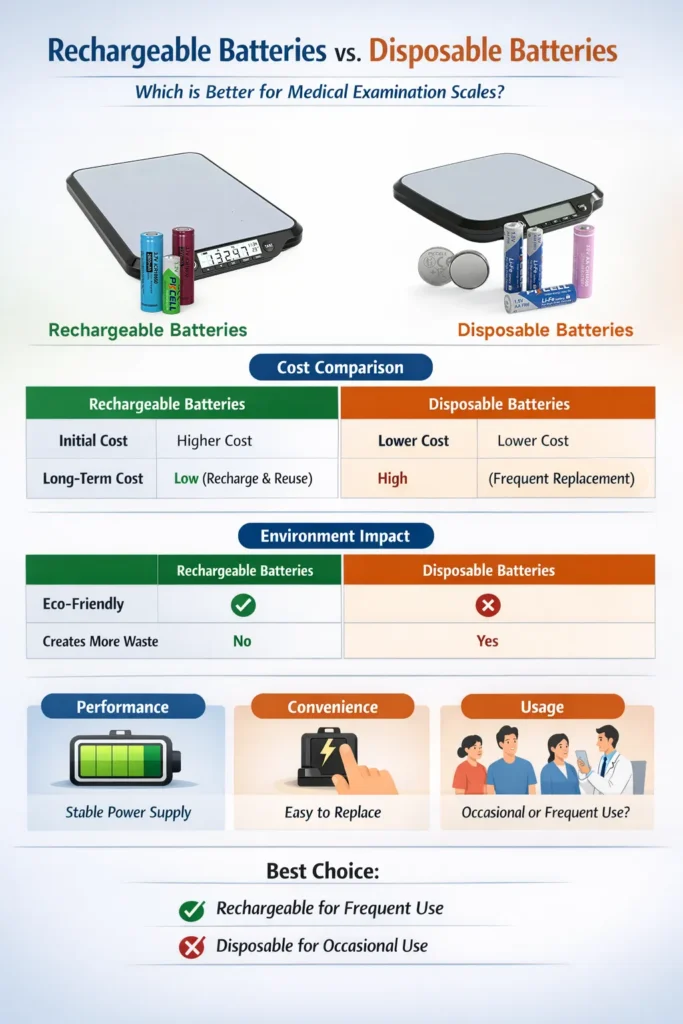
The choice between rechargeable batteries and disposable batteries for medical examination scales depends on usage frequency, cost considerations, and environmental priorities.
Disposable batteries remain suitable for low-frequency and backup applications. However, for long-term use, professional healthcare environments, and modern smart scales, rechargeable batteries clearly offer superior value, performance stability, and sustainability.
By selecting the right battery solution, users and manufacturers can ensure reliable measurements, extended device lifespan, and a more responsible approach to healthcare technology.