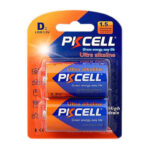
Battery Category: Portable Battery (Non-rechargeable)
Battery Types: Alkaline Zinc-Manganese Battery/Ultra Alkaline Battery/Non-rechargeable Battery
1. Chemistry: Alkaline (Zn/MnO2)
2. Manufacturer:SHENZHEN PKCELL BATTERY CO.,LTD
3. Manufacturing Address:Hongrongyuan North Station Center,No.328,Mintang Road,Longhua District,Shenzhen,China.
4. Prodution site: Made in China
9. Manufacturer’s Website: www.pkcell.com
10. Weight: Approx 135g
11. The hazardous substances: Mercury (Hg): < 0.0001% (Mercury-Free), Cadmium (Cd): < 0.002% (Cadmium-Free), Lead (Pb): < 0.004%, Compliant with REACH and RoHS
12. Usable extinguishing agent: ABC Dry Powder, CO2, or Sand
13. Critical raw material Content(by weight): Manganese Dioxide(40%~44%), Graphite(2%~4.5%), Zinc(16%~19%)
14. Caution: May explode or leak if recharged, inserted improperly or disposed of in fire.Do not open battery.
(NON-RECHARGEABLE. INSERT CORRECTLY (+/-). DO NOT DISPOSE OF IN FIRE OR OPEN. MAY EXPLODE OR LEAK.)
15. Information on the Prevention and Management of Waste Batteries (Pursuant to Article 74(1) of Regulation (EU) 2023/1542)
a) The role of end-users in contributing to waste prevention: Proper use and care can extend the battery’s strict use phase. Use batteries only for their intended purpose. Do not mix old and new batteries, or batteries of different types. Remove batteries from devices if they will not be used for an extended period. Please note that as these are non-rechargeable primary batteries, they cannot be recharged, prepared for re-use, repurposed, or remanufactured.b) The role of end-users in contributing to the separate collection: End-users must discard waste batteries separately from general household or municipal waste. Your active participation in separate collection is essential to ensure that valuable materials can be treated and recycled, and to prevent environmental pollution.
c) Separate collection, take-back, and treatment operations: Waste batteries can be returned free of charge. Please use the designated collection points and take-back systems available at retailers, municipal waste facilities, or authorized waste collection centers in your local area to ensure proper recycling and environmentally sound treatment.
d) Safety instructions for handling waste batteries: Handle waste batteries with care. Do not crush, puncture, dismantle, or short-circuit the battery terminals. Do not expose batteries to high temperatures or fire, as this may cause an explosion or leakage. Store waste batteries in a dry, cool place prior to collection
e) The meaning of labels and symbols:- Crossed-out wheeled bin symbol: Indicates that the battery must not be disposed of in unsorted municipal waste and is subject to separate collection.- CE Mark: Indicates that the product complies with applicable EU health, safety, and environmental protection legislation.
f) The impact of substances on the environment and human health: Batteries contain chemical substances (e.g., Potassium Hydroxide, Zinc, Manganese Dioxide) that can be hazardous. Inappropriate discarding of waste batteries, such as littering or discarding them as unsorted municipal waste, can lead to the release of these substances, resulting in severe soil and water contamination. This poses significant risks to the environment, wildlife, and human health

 Pile alcaline
 Batterie carbone-zinc
 Pile bouton
 Piles primaires au lithium
 Piles rechargeables
 Pack batterie personnalisé
 Batterie lithium rechargeable par USB