 알카라인 배터리
 탄소 아연 배터리
 버튼 셀 배터리
 기본 리튬 배터리
 충전식 배터리
 맞춤형 배터리 팩
 USB 충전식 리튬 배터리
CR123A and ER series batteries are both non-rechargeable lithium primary batteries, but they use different lithium chemistries and are designed for different application requirements.
The main difference is chemistry, nominal voltage, discharge characteristics, pulse capability, and intended application. CR123A batteries typically use lithium manganese dioxide (Li-MnO₂) chemistry and provide a nominal voltage of 3.0V, while ER series batteries typically use lithium thionyl chloride (Li-SOCl₂) chemistry and provide a nominal voltage of 3.6V.
In simple terms, CR123A batteries are commonly selected for compact devices requiring relatively high pulse power, while ER series batteries are widely used for long-life industrial, metering, IoT, and remote monitoring applications where very low self-discharge and long service life are important.
CR123A vs. ER Series: Quick Comparison
| 기능 | CR123A | ER Series |
|---|---|---|
| 배터리 유형 | Primary lithium | Primary lithium |
| Common chemistry | Li-MnO₂ | Li-SOCl₂ |
| Nominal voltage | 3.0V | 3.6V |
| 충전식 | 아니요 | 아니요 |
| Typical design priority | Power and pulse capability | Long service life and low self-discharge |
| Energy density | 높음 | 매우 높음 |
| 자가 방전 | 낮음 | 매우 낮음 |
| Pulse performance | Generally good | Typically limited without pulse-support technology |
| Long-term storage | 우수 | 우수 |
| Common applications | Cameras, alarms, security equipment, flashlights | Smart meters, IoT sensors, GPS trackers, industrial monitoring |
| Typical form factor | CR123A cylindrical | ER14250, ER14505, ER17500, ER26500, ER34615, etc. |
1. What Is a CR123A Battery?
A CR123A battery is a 3V primary lithium battery that normally uses lithium manganese dioxide (Li-MnO₂) chemistry.
Its compact cylindrical form factor and relatively strong discharge capability make CR123A batteries popular in devices that require reliable energy in a small package.
Typical CR123A applications include:
- Security systems
- Wireless sensors
- Cameras
- 손전등
- Alarm equipment
- Access-control equipment
- 가전 제품
- Portable monitoring devices
A standard CR123A battery is approximately 17 mm in diameter and 34.5 mm in length, although exact specifications can vary slightly by manufacturer.
Why Is CR123A Used in Security and Portable Devices?
CR123A batteries provide a combination of compact size, high energy density, low self-discharge, and relatively good pulse performance.
This makes them suitable for devices that remain in standby for long periods but periodically require a higher current pulse.
For example, a wireless security sensor may consume very little current while sleeping and then require a short current pulse when transmitting a signal.
2. What Is an ER Series Lithium Battery?
그리고 ER series generally refers to cylindrical primary lithium batteries based on lithium thionyl chloride (Li-SOCl₂) chemistry.
Unlike CR123A batteries, ER batteries are particularly optimized for long operating life, extremely low self-discharge, stable voltage characteristics, and long-term reliability.
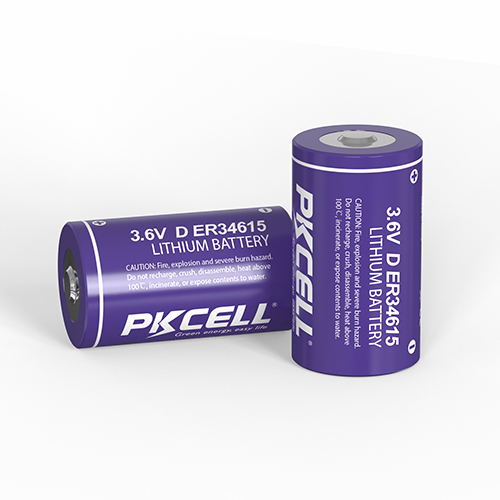
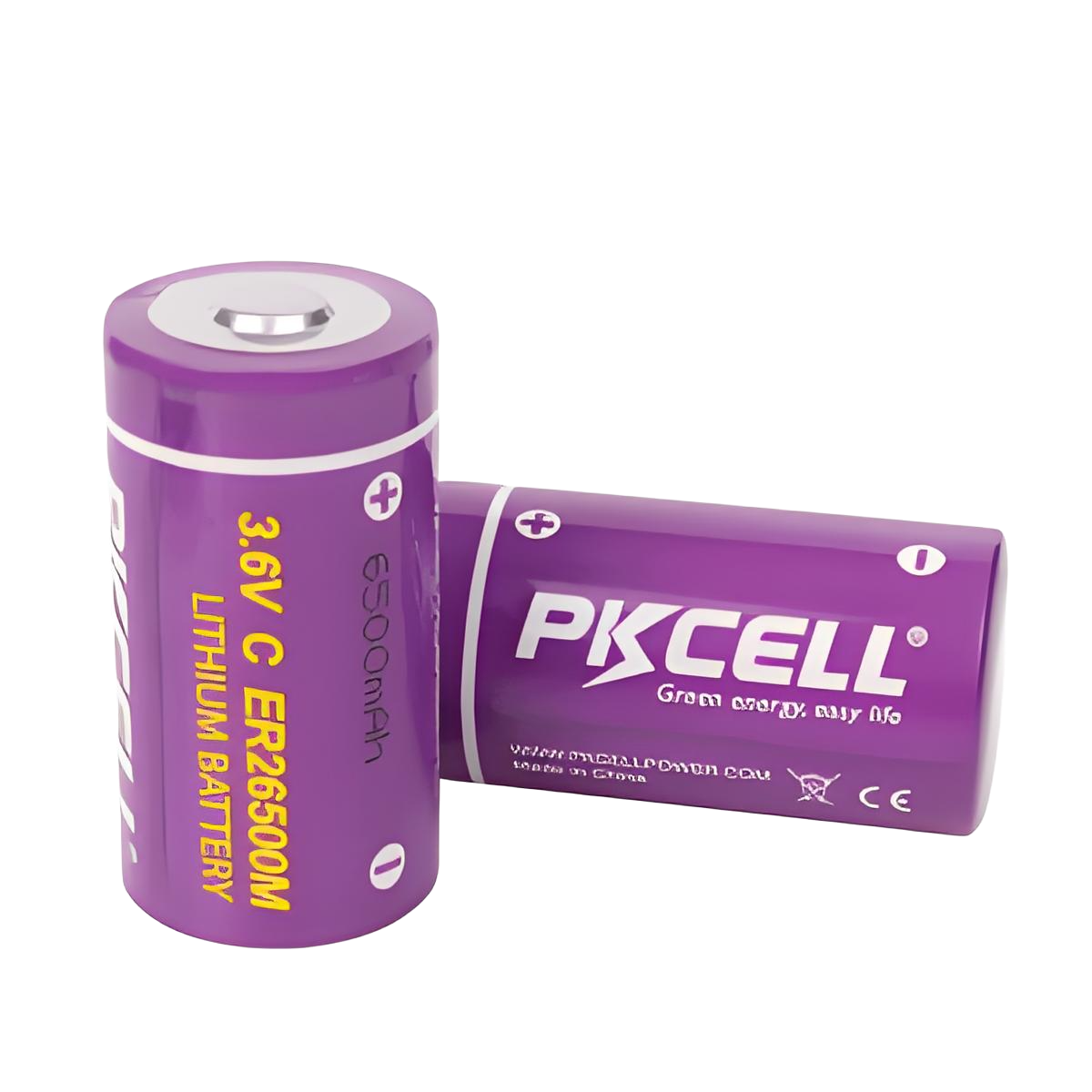
Common ER battery models include:
- ER14250 – 1/2 AA size
- ER14335 – 2/3 AA size
- ER14505 – AA size
- ER17500 – A size
- ER18505 – industrial cylindrical format
- ER26500 – C size
- ER34615 – D size
 |
 |
ER batteries are widely considered for applications where replacing the battery frequently is difficult or expensive.
Typical applications include:
- Smart electricity meters
- Gas meters
- Water meters
- IoT sensors
- Industrial monitoring systems
- GPS trackers
- Security and monitoring equipment
- Remote data loggers
- Medical and industrial instruments
- Utility infrastructure
3. What Is the Main Chemistry Difference?
The most fundamental difference between the two battery families is their electrochemical chemistry.
CR123A: Lithium Manganese Dioxide
CR123A normally uses:
Li + MnO₂ → Li-MnO₂
This chemistry provides a nominal voltage of approximately 3.0V and is capable of delivering relatively strong current pulses.
ER Series: Lithium Thionyl Chloride
ER batteries normally use:
Li + SOCl₂ → Li-SOCl₂
Li-SOCl₂ chemistry provides a nominal voltage of approximately 3.6V and is particularly known for:
- Very low self-discharge
- 높은 에너지 밀도
- 긴 유통 기한
- Long service life
- Stable discharge characteristics
- Wide operating-temperature options
Therefore, although both are lithium primary batteries, CR123A and ER batteries should not be considered automatically interchangeable.
4. Is CR123A the Same as ER14505?
No.
CR123A and ER14505 are different battery types.
The key differences include:
| Parameter | CR123A | ER14505 |
|---|---|---|
| 화학 | Li-MnO₂ | Li-SOCl₂ |
| Nominal voltage | 3.0V | 3.6V |
| Typical size | 17 × 34.5 mm | AA-size |
| 충전식 | 아니요 | 아니요 |
| Main design objective | Compact energy + pulse capability | Long-life industrial power |
| Typical applications | Security, cameras, alarms | Meters, IoT, industrial sensors |
그리고 3.0V vs. 3.6V voltage difference is particularly important.
An ER14505 should not be used as a direct replacement for a CR123A unless the equipment manufacturer confirms that the device can safely operate with the different voltage and discharge characteristics.
5. Which Battery Has a Longer Service Life?
In applications with very low continuous current, ER-series Li-SOCl₂ batteries are generally designed for exceptionally long service life.
This is one reason Li-SOCl₂ batteries are frequently used in smart meters and remote IoT equipment.
A properly designed ER battery system can remain in service for many years because of its:
- Low self-discharge
- 높은 에너지 밀도
- Stable discharge behavior
- High nominal voltage
- Long shelf-life characteristics
However, actual battery life depends on the application.
Important factors include:
Battery capacity + average current consumption + pulse current + temperature + duty cycle + cutoff voltage
Therefore, battery capacity alone should not be used to predict actual operating life.
6. Which Battery Has Better Pulse Performance?
For applications that require relatively high short-duration current, CR123A generally has an advantage over a standard Li-SOCl₂ cell.
Li-SOCl₂ chemistry is excellent for low-current, long-duration applications, but its high internal resistance can limit instantaneous pulse current.
However, this does not mean ER batteries cannot support pulse applications.
For IoT and wireless applications, manufacturers may combine Li-SOCl₂ cells with a hybrid pulse capacitor (HPC) or other pulse-support technology.
This configuration allows the battery to provide the long-term energy while the pulse-support component helps supply short, high-current transmission pulses.
Example
A smart meter may normally consume only a few microamps but occasionally require a high-current pulse to transmit wireless data.
A suitable ER Li-SOCl₂ battery combined with pulse-support technology can therefore be used for this type of application.
7. What About Operating Temperature?
Both battery families can be designed for demanding environments, but the available temperature range depends on the specific battery construction and manufacturer.
CR123A products are commonly used in consumer and security equipment across a moderate temperature range.
ER Li-SOCl₂ batteries are available in versions designed for industrial and wide-temperature applications, making them suitable for outdoor sensors, meters, tracking systems, and industrial monitoring equipment.
For extreme-temperature applications, engineers should always check the manufacturer’s specified operating temperature range, rather than selecting a battery based only on its chemistry.
8. Which Battery Should You Choose?
The correct battery depends primarily on the electrical requirements of the device.
Choose CR123A when:
- The device requires approximately 3.0V
- Compact size is important
- The application requires relatively strong pulse current
- The device is a camera or security product
- The application has intermittent higher-power demand
- A CR123A form factor is already specified by the equipment manufacturer
Choose ER Series when:
- The equipment is designed for approximately 3.6V
- Very long service life is required
- Battery replacement is difficult
- The application has low average current consumption
- Very low self-discharge is important
- The battery is used in a smart meter or IoT sensor
- Remote monitoring equipment needs long-term autonomous operation
- Wide-temperature industrial operation is required
9. Can CR123A and ER Batteries Be Used Interchangeably?
Generally, no.
Although both are lithium primary batteries, their:
- 전압
- 화학
- Internal resistance
- Discharge characteristics
- Pulse capability
- 용량
- Physical dimensions
can be significantly different.
Before replacing one battery with another, engineers should verify:
- Nominal and operating voltage
- Maximum continuous discharge current
- Maximum pulse current
- Battery capacity
- Internal resistance
- Operating temperature
- Physical dimensions
- Terminal configuration
- Equipment cutoff voltage
- Required service life
For OEM applications, battery selection should be validated through electrical and environmental testing.
CR123A vs. ER Series: Which Is Better?
There is no universal “better” battery because CR123A and ER batteries are optimized for different application requirements.
CR123A focuses on a combination of compact size, energy density, and pulse capability, making it common in security, camera, alarm, and portable electronic applications.
ER Li-SOCl₂ batteries focus on extremely low self-discharge, high energy density, and long operating life, making them particularly suitable for smart meters, IoT sensors, remote monitoring, industrial instruments, and other low-power applications.
The correct choice should therefore be based on the device voltage, load profile, pulse demand, operating environment, required service life, and physical constraints.
자주 묻는 질문
Is CR123A a lithium battery?
Yes. CR123A is a non-rechargeable primary lithium battery, commonly based on lithium manganese dioxide (Li-MnO₂) chemistry.
Is an ER battery rechargeable?
No. Standard ER-series batteries are 기본 리튬 배터리 and should not be recharged.
What voltage is a CR123A battery?
A CR123A battery typically has a 3.0V nominal voltage.
What voltage is an ER battery?
Most ER-series Li-SOCl₂ batteries have a 3.6V nominal voltage.
Can I replace CR123A with ER14505?
Not automatically. CR123A and ER14505 use different chemistries and have different nominal voltages and physical dimensions. The equipment manufacturer’s electrical requirements must be checked before substitution.
Are ER batteries suitable for IoT devices?
Yes. ER Li-SOCl₂ batteries are widely used for low-power IoT applications because of their low self-discharge, high energy density, and long service-life potential.
Are CR123A batteries suitable for IoT?
Yes. CR123A can be suitable for IoT and wireless devices, particularly when the application requires relatively strong pulse performance or the equipment is specifically designed around a 3V CR123A battery.
Why are Li-SOCl₂ batteries popular for smart meters?
Smart meters often require very low average current and long maintenance intervals. Li-SOCl₂ chemistry provides high energy density and very low self-discharge, which can support long-term operation when the battery is correctly matched to the meter’s load profile.
Key Takeaway
CR123A and ER-series batteries are both primary lithium batteries, but they serve different engineering requirements.
CR123A = Li-MnO₂ + 3.0V + compact size + relatively strong pulse performance
ER Series = Li-SOCl₂ + 3.6V + extremely low self-discharge + long service life
For cameras, alarms, security systems, and pulse-demand applications, CR123A is commonly considered.
For smart meters, IoT sensors, GPS trackers, industrial monitoring, and long-term remote equipment, ER-series Li-SOCl₂ batteries are often considered.
For OEM projects, battery selection should be based on the complete load profile, voltage requirements, pulse current, operating temperature, expected lifetime, and mechanical design, rather than battery chemistry alone.